Pizza Hut - Delivery & Takeout
- 3.8
- Rating
- 10.00M
- Installs
- Free
- Price

 Analysis by App-foxy
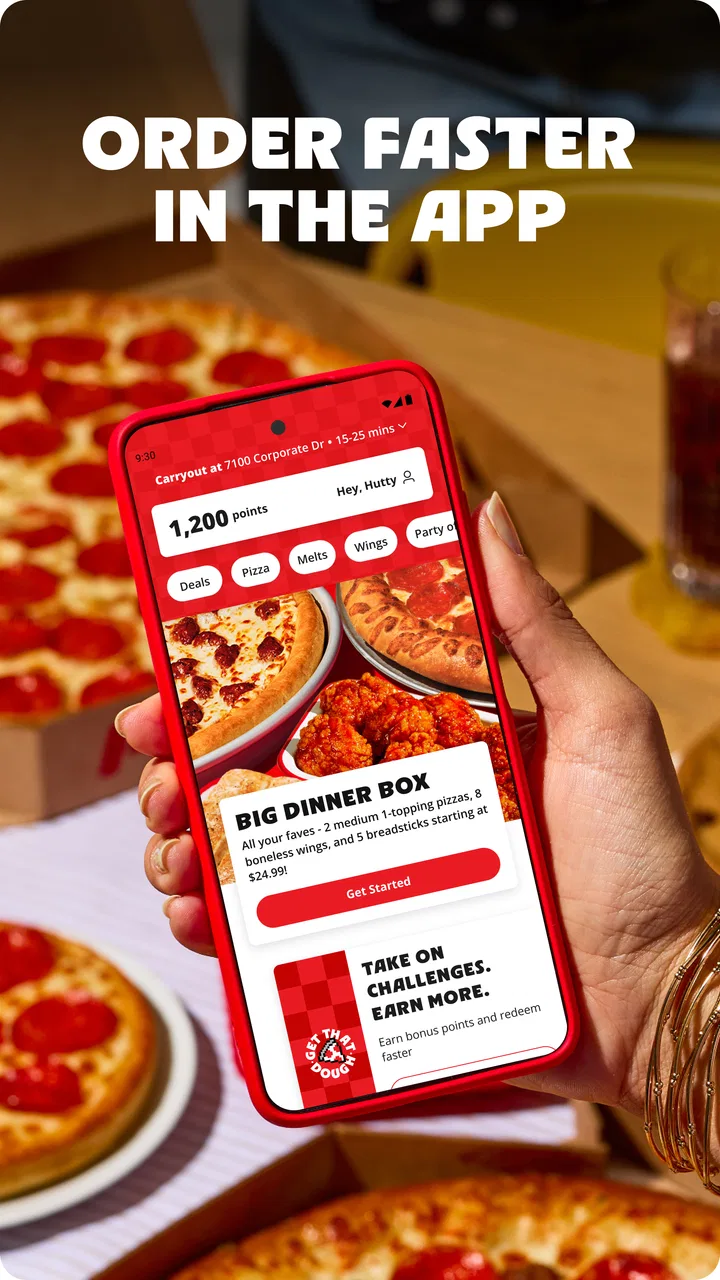
Ordering pizza from a phone sounds simple, but the useful part is not merely replacing a phone call with a checkout screen. What matters is whether the app helps me make a decision quickly, place the order without confusion, and know what is happening afterward. That is the main reason I find Pizza Hut - Delivery & Takeout worth considering: its central promise combines ordering, delivery tracking, and rewards in one place instead of making each step feel separate.
In my experience, this is best understood as a focused Food & Drink app for people who already know they want Pizza Hut and would rather manage the order themselves. It is free, intended for Everyone, and developed by Pizza Hut Inc. The app has been available since May 17, 2011, so it is not a new experiment trying to prove that restaurant ordering belongs on a phone. Its long presence and more than 10 million installs suggest that it has become a familiar route for many customers, even though its average rating sits at around 3.8 from roughly 985 thousand ratings.
Tracking turns a basic order into a more manageable one
I find tracking most useful when I treat it as a cue for planning, not a precise arrival promise. Once an order is underway, I can check its progress before deciding whether to set the table, head out for pickup, or keep a backup plan in mind; that small pause helps me avoid building the evening around an assumption. It also highlights the next question: how well does the app fit the different places and moments in which I order?
You May Also Like

 AccuWeather: Weather Radar
AccuWeather Review: A Quick, Clear Forecast for Everyday Decisions
For everyday plans, the best forecast is the one you can understand quickly. AccuWeather makes rain timing, radar, and local conditions easy to act on, with a few trade-offs.

 Hill Climb Racing
Why Hill Climb Racing Still Turns Crashes Into One More Run
A tiny car, a bumpy hill and one more upgrade: Hill Climb Racing keeps resurfacing because its simple chaos makes every near-miss feel personal.

 AliExpress - Shopping App
AliExpress Makes Global Shopping Feel Personal, but Shoppers Bear the Risk
AliExpress turns a global marketplace into a pocket-sized discovery engine. Its reach is useful, its shopping loop compelling, and its trade-offs easy to miss.

 Lords Mobile: Kingdom Wars
Lords Mobile Is a Kingdom-Building Routine, Not a Quick Match
A case-by-case verdict on the building, battles, device demands, and social commitments that make Lords Mobile rewarding for some players and exhausting for others.

 PDF Scanner app - TapScanner
TapScanner Makes Paperwork Easier to Capture, Check, and Share
TapScanner makes scanning with a phone feel less like a rescue operation and more like a dependable step in getting work done. Its capture tools are useful, though not flawless.

 Block Blast!
 Shows How Much a Puzzle Game Can Leave Out
A quiet grid game shows why puzzle players increasingly value instant clarity, repeatable skill and low-pressure play—and where the genre still needs to catch up.
More From Our News Desk
View All News


Why the useful capability is more than digital checkout
The strongest idea here is the connection between ordering and tracking. A normal website can let me choose food and pay, while a phone call can give me a human answer, but neither approach is automatically convenient when I am waiting and wondering whether I should start setting the table, leave the house, or keep working. Having the order and its progress in the same app gives the process a clearer shape.
That difference is small when everything goes perfectly. It becomes much more valuable when timing matters. If I am ordering for a family movie night, a late shift, or a small gathering, I do not want to call the restaurant again simply to ask whether the food is moving along. The tracking function is useful because it reduces that uncertainty and lets me plan around the order rather than treating delivery as a complete unknown.
I also like that this capability is paired with rewards. Rewards are not the reason I would install the app on their own, but they make repeat ordering feel more organized. Instead of treating every meal as an isolated purchase, the app gives regular customers a reason to keep using the same ordering channel. That is a practical advantage for someone who already orders from Pizza Hut often, while it matters much less to someone who only wants a one-time meal.
The important distinction is that this is not a universal restaurant finder. It is a direct channel for Pizza Hut orders. If I am comparing several nearby restaurants, looking for the cheapest meal across different chains, or choosing based on independent reviews, a general delivery marketplace may be more useful. This app is strongest after I have already made the brand decision.
What the ordering flow feels like in everyday use
I approach the app as a planning tool rather than opening it at the last second while everyone is waiting. I first think about the occasion, the number of people, and whether delivery or takeout makes more sense. That simple pause helps because a branded ordering app is most efficient when I know what I want from it. Browsing without a plan can still work, but it can also turn a quick meal into a longer menu session.
The app’s role is to bring the restaurant’s choices into a mobile format and guide me toward an order. I would check the selected location and the chosen fulfillment method before spending time customizing a meal. That is one of the most useful habits with any restaurant app: confirm the practical details early, then build the order. It avoids the frustration of preparing a basket only to discover that the preferred option does not fit the location or occasion.
For takeout, the value is speed and control. I can place the order before leaving, then use the waiting time to travel instead of standing at the counter deciding what to buy. For delivery, the value shifts toward visibility. Tracking becomes the feature I care about after checkout, because the app remains relevant while the food is on its way.
I would also review the basket carefully before confirming. Restaurant apps make it easy to add a side, change a topping, or select a bundle, but convenience can encourage impulse choices. The final check should cover the food, quantity, delivery or pickup choice, and any available reward benefit. This is not a glamorous tip, but it is the difference between using the app deliberately and tapping through the order on autopilot.
A realistic Friday evening test
Imagine I finish work later than planned and have friends arriving soon. Calling a restaurant means waiting for someone to answer, repeating the order, and having no convenient way to monitor progress afterward. With this app, I can open the menu, assemble an order for the group, choose the appropriate handoff, and return to the app later to follow the delivery.
The tracking element matters most in the gap between confirmation and arrival. I can decide whether to start a film, prepare plates, or wait a little longer without constantly checking the door. If the order is for takeout instead, the same workflow helps me place it before driving over. I am not claiming that tracking removes every delay; it does not. Its real benefit is that it gives me information to work with instead of leaving me entirely dependent on guesswork.
Rewards can also influence this scenario. If I am already a repeat customer, I would check the rewards area before finalizing the order rather than assuming the best value is automatically applied. That is a non-obvious but important workflow: loyalty benefits are easiest to use when I treat them as part of order planning, not as an afterthought after payment.
Where the app fits beside phone calls and delivery marketplaces
Compared with calling a store, the app gives me more privacy and control over the order. I can review what I selected before confirming, and I do not have to explain a complicated order aloud in a noisy room. The trade-off is that a phone call can be better when I need a human explanation, have an unusual request, or feel uncertain about a location-specific question.
Compared with a broad delivery marketplace, the Pizza Hut app is more focused. A marketplace is convenient when I want to compare Pizza Hut with other restaurants, combine different cuisines, or use one account for many businesses. The dedicated app makes more sense when Pizza Hut is already my choice and I want the brand’s own ordering, tracking, and rewards experience together.
Compared with visiting a restaurant in person, the app is better for preparing an order before I arrive and avoiding a long decision at the counter. In-person ordering remains preferable when I am already nearby, want to ask about something directly, or do not want to spend time navigating a digital menu. The right option depends less on technology preference than on whether I need comparison, conversation, or a direct Pizza Hut order.
Small habits that make the experience smoother
I would use the app in three deliberate stages. First, decide whether delivery or takeout is genuinely more convenient. Second, build the order and inspect the basket. Third, keep the app available after confirmation so tracking and rewards remain useful. Treating those as separate steps prevents the common mistake of considering the task finished immediately after tapping the payment button.
Another useful habit is to avoid opening the app only when I am already hungry and rushed. A few minutes of preparation makes it easier to notice serving sizes, remove unwanted extras, and choose a pickup workflow if that is faster for the situation. This is especially relevant for group orders, where a small mistake affects several people rather than just one meal.
I would also keep expectations realistic about tracking. It is a visibility tool, not a guarantee that the food will arrive at an exact moment. If timing is critical, I would leave a buffer and choose pickup when that is more predictable for me. The app helps me manage uncertainty; it does not eliminate the operational limits of a busy restaurant.
Trade-offs that deserve attention
The biggest limitation is its narrow purpose. I would not install it expecting a general-purpose food discovery service. Its usefulness depends on wanting Pizza Hut specifically. Someone who orders from many independent restaurants may get more value from a marketplace that keeps several menus and orders in one place.
The second trade-off is the balance between convenience and attention. A branded app makes ordering easy, but easy ordering can make it tempting to add items without thinking about the total meal. I recommend using the basket review as a budgeting pause. The app can simplify the transaction, but I still need to make the final decision carefully.
The average rating of about 3.8 is a useful reminder to keep expectations measured. That does not tell me that every order will be frustrating, nor does it cancel out the app’s strengths. It does suggest that the experience may vary depending on the device, location, restaurant workload, and individual expectations. I would judge it by whether its direct ordering and tracking workflow solves my problem, rather than assuming a branded app will always be flawless.
There is also a practical reason some people may prefer other methods: digital ordering requires comfort with navigating menus and checking details on a screen. If I need immediate clarification, dislike entering orders digitally, or am dealing with a complicated request, calling can be less stressful. The app is designed for standard ordering decisions, not for replacing every conversation with restaurant staff.
Who gets the most from the rewards and tracking combination
Regular Pizza Hut customers are the clearest audience. If I order often enough to care about rewards, the dedicated app gives me a consistent place to check the available benefit and place the next order. The tracking feature then adds value after checkout, particularly for delivery meals where timing affects the rest of the evening.
It is also a good fit for households that repeat familiar orders. Families, roommates, and busy workers may appreciate having a saved, repeatable mobile routine instead of rebuilding the same decision through a phone call each time. The benefit is not just speed; it is reducing the number of small decisions involved in a familiar meal.
People who frequently switch between restaurants should think twice. A multi-restaurant service may be more convenient if comparison is the main goal. Likewise, someone who rarely orders Pizza Hut may not gain much from rewards and may prefer a browser or a one-off phone order. The app earns its place when repeated use makes its combined features worthwhile.
Device support and the basic commitment
The current version is 6.0.35, and it supports devices running Android 7.0 or later. That makes the app accessible to many Android users, although anyone with an older phone should check compatibility before planning around it. Since the app is free, the decision is mainly about whether its workflow suits the way I order rather than whether I want to pay for access to the app itself.
Its Everyone age rating also fits the everyday nature of the product. I would still treat ordering as an adult household decision when payment and delivery details are involved, but the app itself is not aimed at a restricted audience. The developer is Pizza Hut Inc, which makes the dedicated branding clear: this is the restaurant’s own route for mobile ordering rather than an independent food service.
My recommendation after using it as an ordering tool
I recommend Pizza Hut - Delivery & Takeout when the decision is already “I want Pizza Hut” and I care about managing the order from one place. The combination of direct ordering, delivery tracking, and rewards has a real effect on convenience, especially during busy evenings when I want to know what is happening without making another call.
I would skip it in favor of a marketplace when restaurant comparison is more important, and I would choose a phone call when I need a personal answer or have an unusual request. Those are not failures of the app; they are boundaries of its focused design.
For the right user, the best approach is simple: use it before the rush, check the basket and rewards before confirming, and treat tracking as planning information rather than an exact promise. With those expectations, this free Food & Drink app becomes a practical repeat-ordering companion rather than just another menu on a phone.
Overall, I see it as a useful specialist tool. It does not need to replace every way of ordering food. It only needs to make Pizza Hut delivery and takeout easier to organize, and for regular customers, that focused job is where it makes the strongest case for staying installed.
FAQs for Pizza Hut - Delivery & Takeout
01What features does the Pizza Hut app offer for ordering food?
The Pizza Hut app provides a seamless experience for ordering food, offering features like customizing your pizza, tracking orders in real-time, and accessing exclusive deals and discounts. Users can also save favorite orders, find nearby locations, and choose between delivery or takeout options. The app aims to enhance convenience and customer satisfaction.
02How does the Pizza Hut app handle payment options?
The Pizza Hut app supports multiple payment methods, including credit and debit cards, PayPal, and in some regions, cash on delivery. It ensures secure transactions through encrypted connections. Users can save payment details for faster checkout during future orders, making the process quick and efficient while maintaining security.
03Is the Pizza Hut app available globally?
The Pizza Hut app is available in many countries, but its availability and features might vary depending on the region. Users should check their local app store to confirm availability. The app usually adapts to local menus and payment options, tailoring the experience to different markets around the world.
04How does the Pizza Hut app cater to dietary preferences and allergies?
The Pizza Hut app allows users to customize their orders to cater to dietary preferences and allergies. It provides options for gluten-free crusts, vegetarian toppings, and detailed ingredient lists. While it aims to accommodate various needs, users with severe allergies should verify information with the restaurant to ensure safety.
05Can I earn rewards through the Pizza Hut app?
Yes, the Pizza Hut app features a rewards program where users can earn points for every purchase. These points can be redeemed for free food items or discounts on future orders. The app tracks points automatically, allowing users to easily access their rewards and enjoy benefits as loyal customers.
Pros
- User-friendly interface for easy navigation.
- Exclusive deals and discounts available.
- Real-time order tracking feature.
- Customizable pizza options to suit tastes.
- Secure payment methods enhance safety.
Cons
- Occasional app crashes during peak hours.
- Limited menu compared to in-store options.
- Delivery areas can be restricted.
- Push notifications may be overwhelming.
- Some features require account creation.

Pizza Hut - Delivery & Takeout
Gallery